
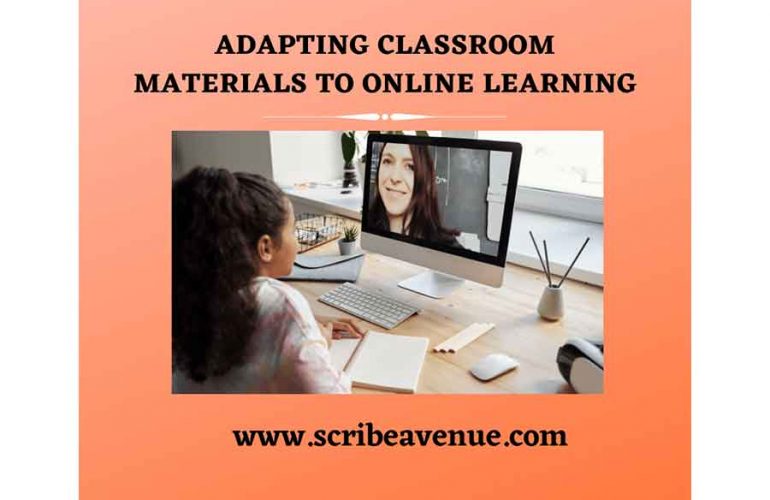
Adapting Classroom Materials to the Online Learning Environment
It may have been the tragedy of the COVID-19 pandemic that forced teachers to make online learning more of a mainstream choice, but in the post-COVID world, it’s very likely to remain. This means that schools, teachers, assistants, and other professionals in the world of education will have to adapt their styles to suit a new order of learning environment.
Changing Learning Spaces
As many teachers have quickly become aware, the online learning space vastly differs from the traditional face-to-face classroom experience. Lessons have to be conducted differently to suit this new space. Teachers who don’t adapt will find that many of the methods they took for granted are much harder to make effective in the online classroom.
Here are some of the best ways to adapt your classroom materials to the online space:
1. Maximizing Attention
Your online classes need to be busy and have plenty of engaging focal points for the students to interact with and use. When students are not on-site, it’s much harder to hold their attention with competing focal points that are around them. If they are at home, there is the allure of their TV set, laptop, games console, or other family members making noise. Your lesson has to have plenty to look at and plenty to do.
2. Making Students Vocal
With things moving online, one of the ways to maintain engagement is to get students talking, asking questions, and leading discussions. When students are talking, they have to be focused on the lesson, so including direct question-answer engagement is an easy and simple way to enhance lessons. Avoid the lecture-style class as much as possible.
3. Short, Sharp, Sections
In an online class, any single activity or section of the instruction that goes on too long is bound to result in the distraction or loss of focus of the students. For online classes, clear sections of about 15 minutes are the most ideal, and short activities can be completed in 5-10 minutes.
4. Use Props
If using lots of different media at the focal point is losing its novelty, then using real-life objects as props can help the classroom stay focused and interested. In addition, you could ask the students to prepare things from their homes or other spaces to hold up and talk about.
5. Slow Down and Enunciate
Finally, one of the top challenges for online instruction is comprehension among students and teachers. When you’ve been in a classroom for a long time, you take for granted that students- understanding you or not- hear your every word with clarity. Online, however, even a momentary interruption in signal strength or some background or static noise can drastically alter students’ ability to catch what you’re saying.
To that end, you should slow down as you speak, enunciate words more carefully, and be mindful of what a good speed is for online classes versus in-person lessons. You’ll find that there is a difference.
Change the Mindset; Change the Class
A new classroom environment warrants a new and creative approach to your teaching style. Never assume that everything you do in the classroom can be simply transplanted into the online learning space. Work hard to adapt, and you’ll find the online experience rewarding in its own way.